Opening Scene
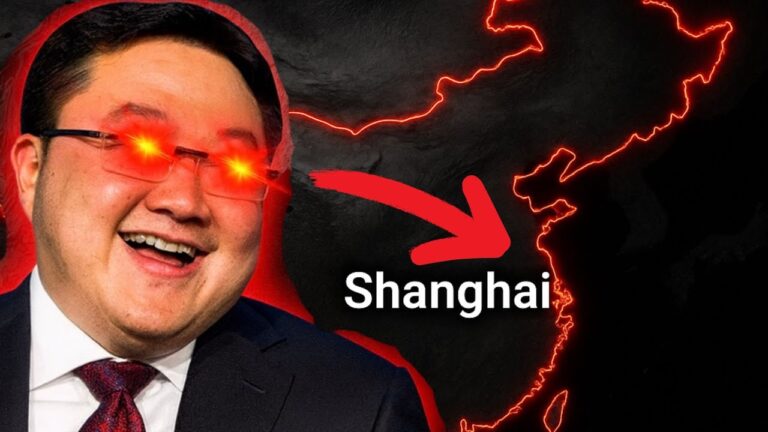
A scream cuts through the night. Floodlights slice across a jungle compound as men in torn shirts run for their lives. They called it Crouching Tiger Villa — a fortress built deep in Myanmar’s borderlands by one of China’s most powerful crime families. When the shooting stopped, dozens were dead. A year later, in a Chinese courtroom, a judge read one word: death. Eleven members of the Ming family, executed.
But this wasn’t pure justice. It was cleanup — because the empire they built grew for years under Beijing’s watch.
Watch the full Silk Street episode
Story Summary
Hidden in Myanmar’s northern Shan State, on the edge of the China border, lies Laukkai — a city that was never meant to exist in the way it does. On maps it belongs to Myanmar. In reality it has long been run by militias, warlords, and a handful of powerful families whose loyalty was for sale to whoever paid best.
Among those families, one name came to define the modern era of scam compounds: the Mings.
Originally from Yunnan, they crossed the border into Kokang — a Chinese-speaking enclave of Myanmar — as traders and small-time operators. As online gambling and telecom fraud exploded across Southeast Asia, the Ming clan scaled faster than anyone else. They built casinos, then “parks,” then walled compounds that could hold thousands of workers.
At the center of this empire was a sprawling complex locals and Chinese commentary called Crouching Tiger Villa — described as one of the largest telecom fraud compounds in Kokang. From the air it looked like a luxury resort: manicured gardens, golden roofs, swimming pools. Inside, it was a prison.
Trafficked workers from China, Thailand, Malaysia, Laos and beyond were lured with fake job offers, stripped of their passports, and forced to run online scams: romance cons, crypto plays, fake investments, pig-butchering schemes. Survivors later described beatings, torture, and killings when quotas weren’t met or escape was attempted.
For years, Crouching Tiger Villa and other “scam parks” were effectively untouchable. The Ming syndicate paid local militias for armed protection, cut deals with officials, and, crucially, kept a lot of trouble off China’s soil: gamblers stayed in Myanmar, dirty money flowed back into Yunnan, and Beijing could pretend it didn’t see what was happening just over the border.
That changed in 2023.
Videos started leaking out — barefoot men and women sprinting through mud under gunfire, claiming they were captives fleeing Laukkai compounds. Families in China recognized missing relatives in the clips. Anger exploded on Weibo and WeChat. State media tried to bury the story, but the scale was too big to ignore.
Under pressure from Beijing, Myanmar began handing over telecom-fraud suspects en masse. By November 2023, Chinese authorities said 31,000 suspects from northern Myanmar had been transferred into Chinese custody; by May 2024 the number had climbed to over 49,000. Among those arrested: key members of the Ming clan, while patriarch Ming Xuechang (aka Ming Guoping) reportedly died by suicide during a raid.
In September 2025, the Wenzhou Intermediate People’s Court tried 39 defendants tied to the Ming syndicate on charges including fraud, illegal detention, intentional killing, gambling, money laundering, and organizing scam compounds in Kokang.
The result:
- 11 people sentenced to death, including senior family figures such as Ming Guoping and Ming Zhenzhen.
- 5 more received death sentences with reprieve (usually commuted to life if no new offenses).
- The remaining defendants were handed long prison terms, fines, and asset seizures.
Chinese and international coverage framed this as one of the largest cyber-fraud crackdowns in history: a family-run syndicate that made more than 10 billion yuan (roughly USD $1.4 billion) from scam parks, casinos, drugs, and prostitution; killed at least 14 workers who tried to escape or disobey; and imprisoned tens of thousands in “factories of deceit” like Crouching Tiger Villa.
But behind the official language of “justice served,” a harder question remains:
How did this empire grow so vast, for so long, under the nose of the same state that ultimately destroyed it?
The Hidden Angle: What’s Verified vs. What’s Shadow
Verified by court records and state media:
- The Ming family led a large criminal syndicate based in Myanmar’s Kokang region, running telecom-fraud compounds, casinos, and related rackets since around 2015.
- On September 29–30, 2025, a Chinese court in Wenzhou sentenced 39 defendants: 11 to death, 5 to death with reprieve, and others to prison terms of 5–24 years.
- The syndicate’s operations defrauded victims of more than 10 billion yuan, and at least 14 people were killed inside the scam parks, including workers trying to flee.
- Chinese authorities confirm that tens of thousands of fraud suspects have been repatriated from northern Myanmar since mid-2023, as part of a joint crackdown with Myanmar and Thailand.
Credible reporting, but not fully transparent:
- Chinese and regional reporting describe Crouching Tiger Villa as a flagship Ming compound and one of Kokang’s largest scam centers, housing thousands of trafficked workers.
- Survivors and NGOs describe widespread torture, starvation, and killings in similar scam parks across Shan State, including captivity of workers lured from China and Southeast Asia.
- The October 2023 “mass escape” scenes from northern Myanmar — barefoot prisoners fleeing, gunfire, and chaotic videos — match patterns of real uprisings and crackdowns documented in and around Kokang’s scam hubs after Operation 1027 began.
Speculative, but widely inferred:
- The degree to which Chinese local officials, security services, and connected business elites benefited from Ming-linked operations before the crackdown. Multiple analyses note that Kokang scam parks operated openly for years while money flowed back into China, then were violently dismantled once public outrage and geopolitical pressure peaked.
- Whether the full list of officials who took bribes or looked the other way will ever face the kind of public trials the Ming family did. So far, the narrative centers almost entirely on “evil criminals” rather than the ecosystem that enabled them.
Pull Quote
“A court in China sentenced 11 people to death for their roles in a family-run crime syndicate accused of running illegal gambling and scam operations worth more than $1.4 billion and for the deaths of disobedient workers.” AP News
What This Scandal Really Reveals
The Ming case isn’t just about one family’s brutality. It exposes how modern scam empires are built:
- On the edge of failed states. Laukkai sits in a grey zone of Myanmar’s civil war, where central authority is weak and militias sell territory to whoever can pay.
- With tacit permission. The Ming syndicate taxed casinos, supplied militias, and kept Chinese gamblers and criminals offshore. For years, that made them useful.
- On the backs of trafficked labor. Scam centers across Myanmar, Cambodia, and Laos now rely on forced labor: people tricked by job ads, then imprisoned in compounds and ordered to scam victims worldwide.
When victims finally ran and footage leaked, Beijing shifted from tolerance to obliteration. The Ming family went from protected partners to expendable proof that China could “wipe out” cross-border fraud.
But even as Ming leaders are executed, the underlying business model is already resurfacing in new hubs like Myawaddy’s KK Park and other compounds along the Thai-Myanmar border. Crackdowns scatter the scam industry; they don’t erase it.
The message of the Ming trial is clear:
- To the public: “China protects its citizens. No syndicate is safe.”
- To insiders: “You can make money in the shadows — until the moment your existence embarrasses the state.”
Seeking Alpha
While the Mings built a fortune on lies, you can build wealth the right way — with real analysis instead of fake dashboards.
If you care how money actually moves, not just how it’s stolen, tools like Seeking Alpha Premium can help you research companies, track risks, and understand where capital is really flowing.
- In-depth stock research and quant ratings
- Global coverage of Asia-exposed companies, banks, and infrastructure plays
- Screens to avoid “too good to be true” stories in your portfolio
Get Your Exclusive Discount Here
Related Silk Street Stories
If this jungle empire pulled back the curtain for you, these episodes go deeper into the same world:
- Lai Xiaomin – The Chinese Tycoon Who Owned 100 Mistresses, 100 Mansions, and a Death Sentence
- Lei Zhengfu – The Hotel Video China Tried to Erase
Follow our full Chinese Elite Exposed series on YouTube to uncover every chapter they tried to erase.
Closing Reflection
Crouching Tiger Villa was built to feel untouchable: walls, guards, guns, and money so thick it could buy silence on both sides of the border. For years, it worked. The screams stayed inside. The profits crossed out.
Then one night, the workers ran. A few phones stayed recording. And suddenly a jungle fortress that was never meant to exist was on every screen in China.
The Ming family will die in prison jumpsuits, not designer suits. Their villas will rot, fountains dry, walls cracked by vines. But the real question isn’t whether the Mings deserved their fate. It’s how many more empires like theirs are still out there — tolerated until they become inconvenient.
Because in this world, scam kingdoms don’t appear out of nowhere. They grow in the blind spots power chooses not to see.
Before You Go…
Each story reveals another piece of the same truth: Power. Betrayal. Collapse.
✅ Seeking Alpha Premium – Get in-depth analysis, earnings breakdowns, and quant ratings that help you invest smarter.
👉 Start your free 7-day trial & exclusive discounts
✅ Alpha Picks – High-conviction stock picks delivered monthly, based on proven strategies.
👉 Exclusive discount
✅ Best Value: Premium + Alpha Picks Bundle – everything you need to research, track, and act.
👉 Save big with the bundle
Contact: silkstreettv@gmail.com
Watch all episodes: SilkStreetTV.com